
If you own a log home, spring and early summer bring more than warmer weather, they also bring carpenter bees. While these insects may seem harmless at first, carpenter bees can cause serious cosmetic and structural damage to log homes over time if left untreated.
At 888 Log Guys, one of the most common seasonal concerns homeowners report is bee activity around exposed logs, trim, decks, and soffits. Understanding how carpenter bees behave, and how to protect your home, is essential for long-term log home maintenance.
What Are Carpenter Bees?
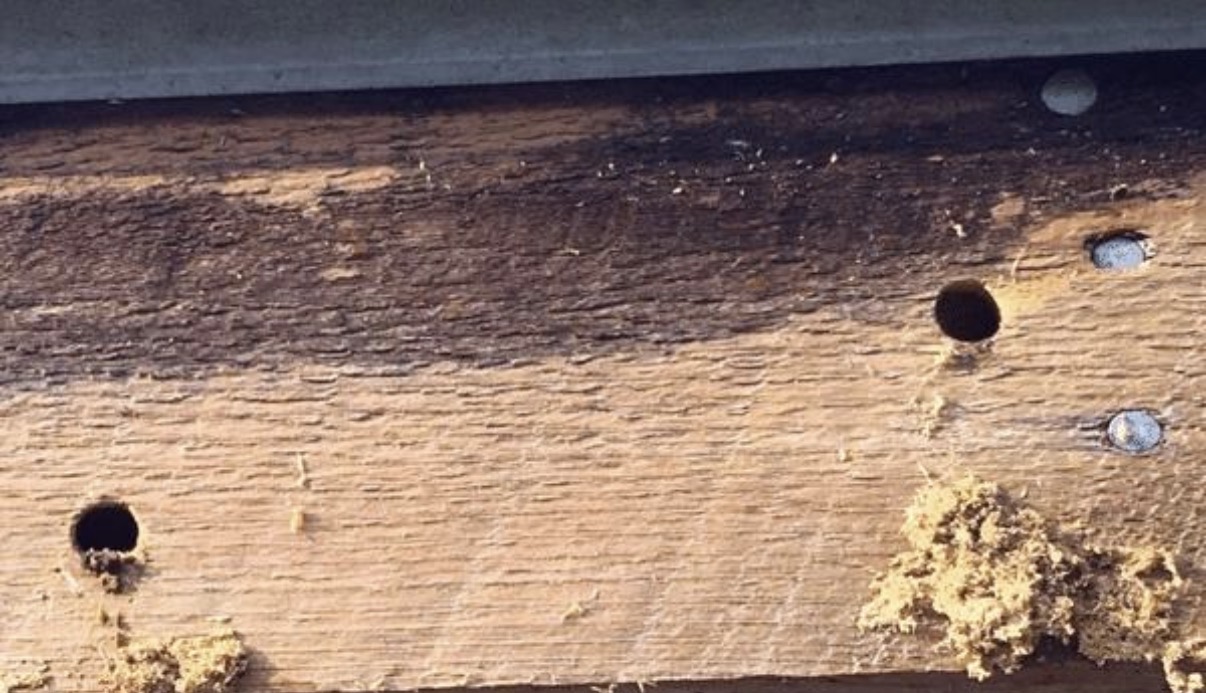
Carpenter bees are large, solitary bees that bore perfectly round holes into wood surfaces to create nesting tunnels. Unlike termites, they do not eat wood, but the tunneling itself can still cause extensive damage over time.
According to the University of Kentucky Entomology Department, repeated nesting activity can weaken wood surfaces and attract woodpeckers that peck into the wood searching for larvae. This secondary damage can become even more destructive than the bees themselves.
Common Areas Carpenter Bees Target:
- Exposed logs
- Fascia boards
- Deck railings
- Eaves and soffits
- Trim and siding
- Unsealed or weathered wood
Why Log Homes Are Especially Vulnerable
Log homes naturally attract carpenter bees because many contain large areas of exposed softwood surfaces. Homes with aging stain systems or weathered wood are particularly vulnerable.
Carpenter bees are especially attracted to:
- Bare wood
- Faded stain
- Unsealed logs
- Dry checking cracks
- Cedar and pine surfaces
The restoration professionals at 888 Log Guys Log Home Maintenance Services often find that homes overdue for maintenance are far more likely to experience recurring carpenter bee problems.
Signs of Carpenter Bee Damage
Many homeowners mistake carpenter bee activity for harmless seasonal insects. However, early detection is important.
Watch for:
- Perfectly round holes about the size of a dime
- Yellow staining beneath holes
- Sawdust-like debris under logs or trim
- Hovering bees around rooflines or decks
- Woodpecker damage near nesting sites
How to Prevent Carpenter Bees in Log Homes
1. Keep Your Stain System Maintained
One of the best defenses against carpenter bees is maintaining a quality stain and sealant system. Properly finished wood is far less attractive to nesting bees.
Learn more about log home staining services offered by 888 Log Guys.
The USDA Forest Products Laboratory also notes that protective coatings help minimize wood deterioration caused by insects and moisture exposure.
2. Seal Checks and Cracks
Carpenter bees often target checks and natural cracks in logs. Professional caulking and chinking can reduce access points and help deter nesting.
Explore chinking and caulking services to better protect vulnerable areas of your home.
3. Address Weathered or Bare Wood Quickly
Faded or peeling stain creates ideal nesting conditions. If your logs are dry, gray, or rough to the touch, restoration may already be overdue.
The team at 888 Log Guys Log Home Restoration can inspect your home for early warning signs of insect and moisture damage before major repairs become necessary.
4. Repair Existing Damage
Once carpenter bees establish tunnels, they often return year after year. Existing holes should be professionally treated and repaired before refinishing.
Ignoring damaged areas can lead to:
- Moisture intrusion
- Rot development
- Increased insect activity
- Woodpecker damage
- Structural deterioration
Why Professional Maintenance Matters
Many homeowners try DIY insect treatments without addressing the underlying issue: exposed and unprotected wood.
Professional log home maintenance focuses on long-term prevention by:
- Restoring protective finishes
- Repairing vulnerable wood
- Sealing entry points
- Correcting moisture issues
- Maintaining proper exterior protection
Regular inspections and maintenance can dramatically reduce future restoration costs while preserving the beauty and value of your home.
Protect Your Log Home Before Damage Spreads
Spring and summer are peak carpenter bee seasons, making now the ideal time to inspect your home for damage and preventative maintenance needs.
If you’ve noticed bee activity, wood damage, or fading stain on your log home, the experts at 888 Log Guys can help restore and protect your investment with professional staining, sealing, repair, and restoration services.
Contact the team through the 888 Log Guys Contact Page to schedule an inspection or consultation.