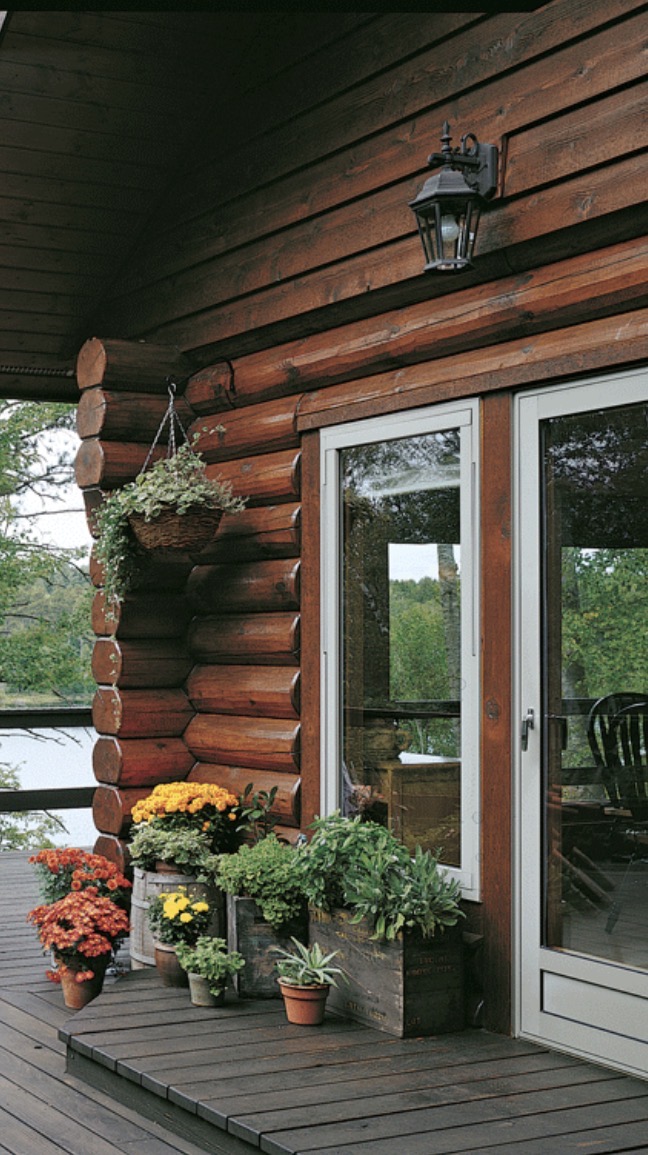

There is nothing quite like the warmth and character of a log home. But as beautiful as natural logs are, they require regular care to stay protected from moisture, sunlight, insects, and the elements. One of the most common mistakes log homeowners make is assuming that a faded or weathered home simply needs another coat of stain. Sometimes it does, but other times, applying another coat of stain without addressing the underlying problems can simply cover up issues that need attention.
So how do you know when your log home needs more than routine maintenance?
Here are seven signs that it may be time to consider professional log home restoration.
1. Your Logs Have Turned Gray
Gray, weathered logs are one of the most obvious signs that a home’s exterior finish is no longer providing adequate protection. When wood is exposed to sunlight and weather, the surface can deteriorate and lose its natural color. UV exposure can break down finishes, while repeated moisture exposure can leave the wood vulnerable to further deterioration.
A small amount of weathering does not necessarily mean your home needs a complete restoration. But extensive graying, especially when combined with failing stain, cracks, or soft wood, deserves a closer look. Before simply applying another coat of stain, the existing finish may need to be properly removed and the wood prepared.
2. Your Stain Is Peeling, Flaking, or Failing
If your stain is peeling, cracking, or flaking away, adding another layer over the existing finish usually isn’t the solution. The surface needs to be evaluated to determine why the finish failed in the first place. Was the previous surface preparation inadequate? Has the wood been exposed to excessive moisture? Has the finish simply reached the end of its service life?
Professional restoration may involve removing failed finishes through methods such as media blasting, chemical stripping, and sanding before applying a new protective system. Proper preparation is one of the most important parts of a successful restoration.
3. You Find Soft Spots or Suspect Log Rot
This is one sign you should never ignore.
Wood decay is strongly associated with moisture. The USDA Forest Service notes that keeping log structures dry is one of the fundamental principles of protecting them from decay and insect damage. Soft areas, discoloration, crumbling wood, or areas that feel noticeably different when inspected can indicate deterioration. And log rot doesn’t always begin in an obvious location. Problem areas can develop around windows, doors, roof lines, decks, log ends, joints, and places where water tends to collect.
If you suspect rot, have the area evaluated rather than simply staining over it.
4. Your Chinking or Caulking Is Cracked or Pulling Away
Chinking and caulking are critical components of a log home’s weather barrier. They help seal the joints and cracks between logs and around other areas where water, air, and insects could enter. If your chinking is cracked, separating from the logs, missing, or deteriorating, moisture can find its way into places where you don’t want it. Depending on the condition of the existing material, repairs may be sufficient. In other situations, extensive removal and replacement may be part of a larger restoration project.
5. You See Water Damage Around Windows, Doors, or Log Ends
Pay close attention to areas where water naturally collects or where different building materials meet.
Look around:
● Windows
● Doors
● Roof lines
● Deck connections
● Log ends
● Corners
● Porches
● Gutters and downspouts
Dark staining, soft wood, peeling finish, deteriorated sealant, or recurring moisture can all be reasons to investigate further.
The goal isn’t simply to repair the damaged area. It’s to determine how the moisture got there and address the source.
6. Your Home Hasn’t Been Professionally Maintained in Years
Sometimes the biggest warning sign is simply time.
If you purchased an older log home and don’t know when it was last restored, stained, sealed, or inspected, it may be worth having a professional evaluate the condition of the logs.
This is especially important if you don’t know:
● What stain was previously used
● When the home was last stained
● Whether the chinking has been replaced
● Whether preservatives were applied
● Whether previous repairs were performed
● Whether areas of rot have been repaired
A professional evaluation can help establish a baseline and determine what your home actually needs.
7. You’re Tempted to “Just Put Another Coat On It”
This may be the biggest warning sign of all.
A log home restoration isn’t simply about making the logs look pretty again. The goal is to address the condition of the wood, prepare the surface correctly, protect the logs, and create a reliable exterior system that helps keep moisture and other damaging elements out.
At 888 Log Guys, our restoration process can include surface preparation, preservation, log repair, chinking and caulking, and staining depending on the home’s condition and the scope of the project. Restoration Doesn’t Always Mean Replacing Your Logs. The word “restoration” can sound intimidating. It doesn’t automatically mean your home needs extensive log replacement. Every log home is different. Some homes may need cleaning and a new finish. Others may require more extensive surface preparation, repairs, preservation, and sealing. The important thing is to identify problems before they become larger problems.
The USDA Forest Service emphasizes moisture control as a key part of protecting log structures from decay. That makes preventative maintenance and early detection especially important for log homeowners.
What Should You Do If You’re Unsure?
If you’re looking at your log home and thinking, “I’m not sure if this needs restoration or just maintenance,” that’s exactly when an experienced professional can help. At 888 Log Guys, we specialize in log home restoration, repair, preservation, staining, chinking, and maintenance. We evaluate the condition of the home and develop a restoration plan based on what your home actually needs, not simply what looks good for the moment.
Protect Your Log Home Before Small Problems Become Big Ones. Your log home is an investment, and proper maintenance can help protect that investment for years to come. If you’re seeing gray logs, failing stain, cracked chinking, soft wood, or signs of moisture damage, don’t simply cover the problem with another coat of stain. Have it evaluated.
888 Log Guys has been helping homeowners restore and protect log homes throughout Mid-America for more than 25 years. If your log home needs attention, request an estimate and let our experienced team help determine the best path forward.