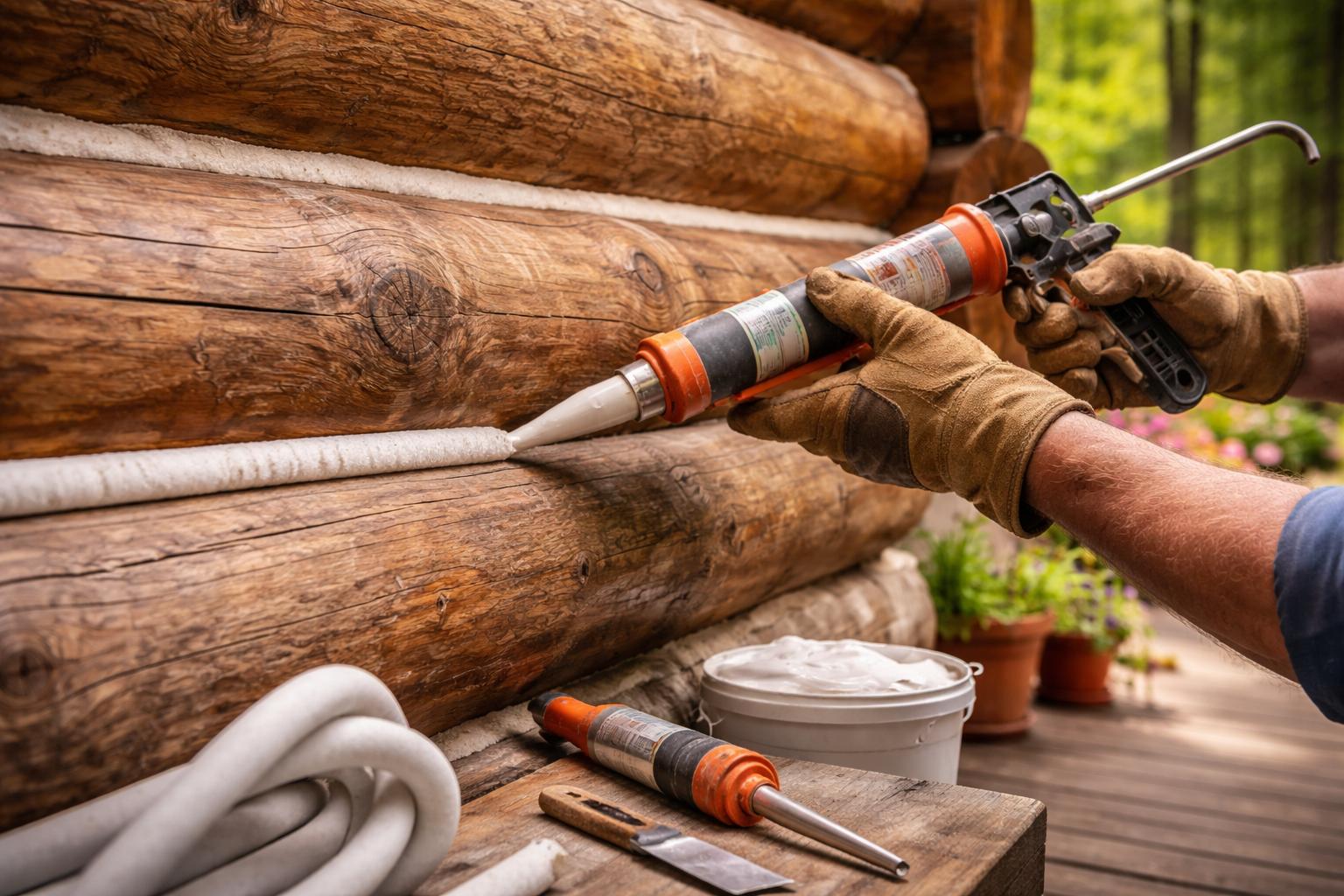

When it comes to log home maintenance and restoration, few elements are as important as proper chinking and caulking. These materials do more than improve appearance, they are critical for protecting your home from moisture, air infiltration, pests, and long-term structural damage.
Whether you’re maintaining an older home or completing a full log home restoration, understanding the role of chinking and caulking can help you protect your investment for years to come.
While chinking is typically used in larger gaps, log home caulking is applied to:
• Smaller cracks and checks in logs
• Seams around windows and doors
• Corners and joints
High-quality log home caulking products create a strong seal that prevents water penetration and air leaks while maintaining the natural movement of the wood.
Why Chinking and Caulking Matter
Without proper sealing, your home becomes vulnerable to several issues:
1. Moisture Damage
Water infiltration can lead to rot, mold, and costly repairs. Effective log home sealing helps keep moisture out and extends the life of your logs.
2. Energy Loss
Gaps between logs can significantly reduce energy efficiency. Proper chinking and caulking for log homes improves insulation and reduces heating and cooling costs.
3. Pest Intrusion
Small openings can invite insects and rodents. Sealing these entry points is a key part of log home pest prevention.
4. Structural Integrity
Over time, untreated gaps can worsen. Routine log home maintenance ensures your home remains strong and stable.
Signs Your Log Home Needs Chinking or Caulking
Watch for these common indicators:
• Visible gaps between logs
• Cracked, brittle, or missing chinking
• Drafts or uneven indoor temperatures
• Water stains or moisture inside
• Increased insect activity
If you notice any of these, it may be time for log home chinking repair or replacement.
Professional vs. DIY Application
While small touch-ups can be handled by homeowners, full log home chinking and caulking projects require experience and the right materials. Improper application can lead to:
• Premature failure
• Trapped moisture
• Reduced flexibility
Hiring professionals ensures proper surface preparation, product selection, and long-lasting results.
When to Schedule Chinking and Caulking Work
Spring and fall are ideal times for log home sealing and restoration, as moderate temperatures allow materials to cure properly. Regular inspections, at least once per year, can help catch issues early.
Work With Log Home Restoration Experts
If your home needs log home chinking, caulking, or full restoration, working with experienced professionals can make all the difference. From minor repairs to complete refinishing, expert care ensures your home is properly protected.
Learn more about professional log home restoration services, chinking, and caulking here:
Helpful Resource
For more detailed information on proper sealing techniques and materials, visit:
https://www.loghome.com/articles/chinking-log-homes
Final Thoughts
Proper chinking and caulking for log homes are essential for maintaining beauty, efficiency, and durability. By staying proactive with log home maintenance and sealing, you can prevent costly damage and keep your home in top condition.
Whether you’re addressing small gaps or planning a full log home restoration, investing in quality materials and expert application will protect your home for years to come.