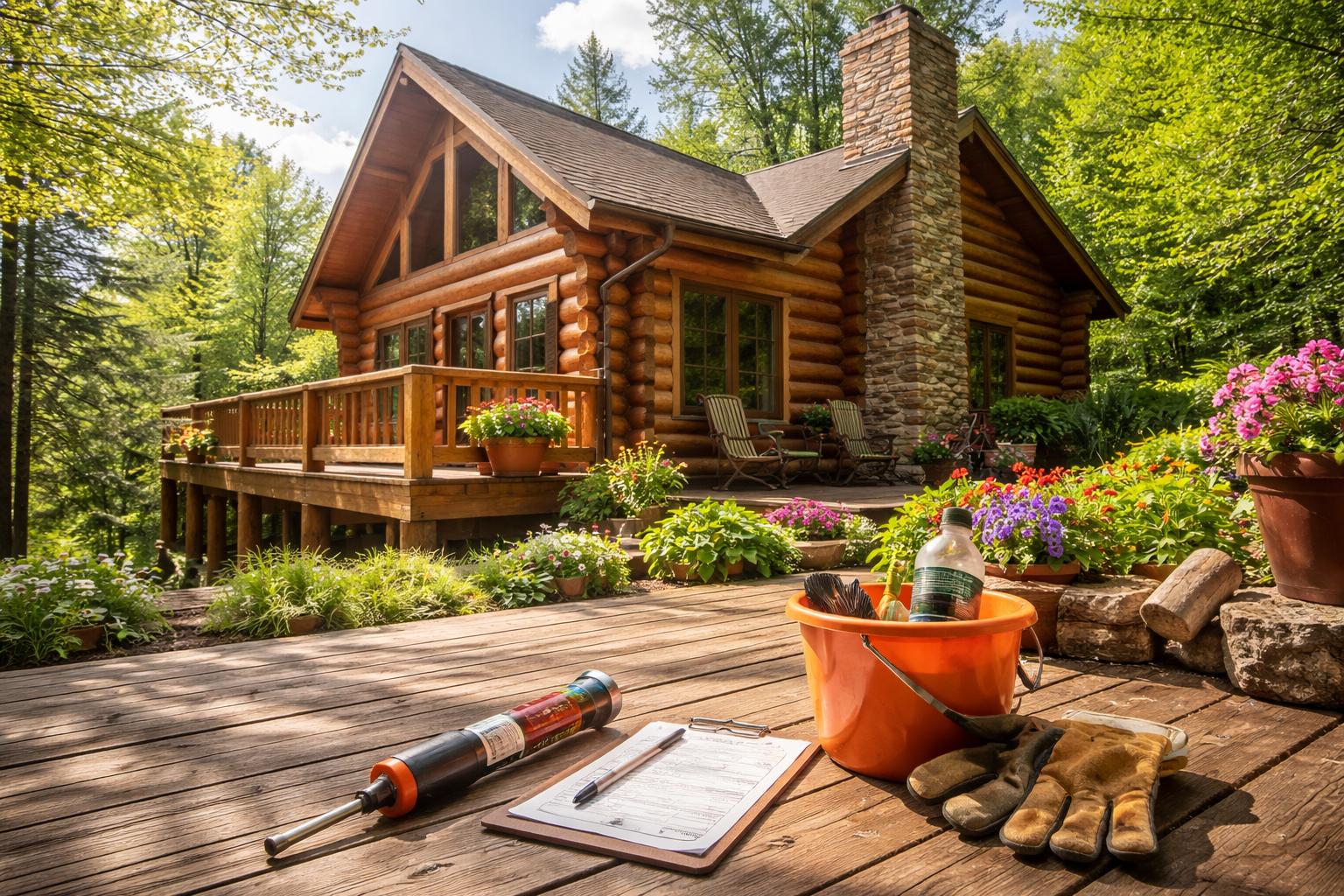

As winter fades and warmer temperatures roll in, spring is the perfect time for log home maintenance. A seasonal checkup not only keeps your home looking beautiful but also protects your investment and extends the life of your logs. Consistent log cabin maintenance is key to preventing costly repairs and preserving the natural integrity of your home.
1. Inspect the Exterior Logs
Begin your spring log home inspection by walking the perimeter of your home. Look for:
• Cracks or checks that may have expanded during colder months
• Signs of moisture damage or discoloration
• Areas where stain or sealant appears worn
Routine log home inspections help catch small issues before they turn into major structural concerns.
2. Clean the Log Surfaces
Over time, dirt, pollen, mold, and mildew can accumulate. Proper log home cleaning is essential in the spring:
• Use a log-safe cleaner to remove buildup
• Restore the wood’s natural appearance
• Prepare the surface for staining or sealing
Avoid excessive pressure washing, as it can damage wood fibers and reduce the lifespan of your logs.
3. Check Caulking and Chinking
Your home’s log home chinking and caulking play a critical role in energy efficiency and moisture protection. Inspect for:
• Cracks or gaps
• Separation at joints
• Air or water entry points
Timely chinking repair helps maintain insulation and prevents water intrusion.
4. Maintain Gutters and Drainage
Proper drainage is one of the most important aspects of log home care:
• Clean gutters and downspouts
• Ensure water flows away from the home
• Check for splashback onto logs
Water damage is one of the leading causes of deterioration in log homes, making this step essential.
5. Watch for Pest Activity
Spring brings increased insect activity. Be proactive with log home pest prevention:
• Look for small holes or sawdust (wood-boring insects)
• Watch for carpenter bees and ants
• Check for rodent entry points
Early detection helps prevent long-term structural damage.
6. Evaluate Stain and Sealant
A high-quality finish is critical for log home protection. If your home looks faded or worn, it may be time for log home staining or refinishing:
• Protect against UV damage
• Seal out moisture
• Enhance wood appearance
Regular log home refinishing is one of the best ways to extend the life of your home.
7. Inspect Decks, Railings, and Exterior Features
Decks and porches require consistent log home exterior maintenance:
• Check for loose boards or fasteners
• Look for peeling or worn finishes
• Identify any soft or rotting wood
These areas often require more frequent upkeep than the main structure.
When to Call a Professional
While some maintenance tasks can be handled on your own, larger projects like log home restoration, media blasting, and full refinishing are best left to professionals. If your home shows signs of extensive wear, hiring an expert in log home repair and restoration can save time and money in the long run.
For expert help with log home maintenance, restoration, and refinishing, visit:
Helpful Resource
For additional guidance on proper log cabin care and maintenance, visit:
https://www.loghome.com/articles/log-home-maintenance-checklist
Final Thoughts
Consistent log home maintenance is the key to preserving the beauty and durability of your home. A simple spring routine focused on cleaning, inspection, and minor repairs can prevent major issues down the road.
By staying proactive with your log cabin maintenance plan, you’ll protect your investment and enjoy your home for years to come.