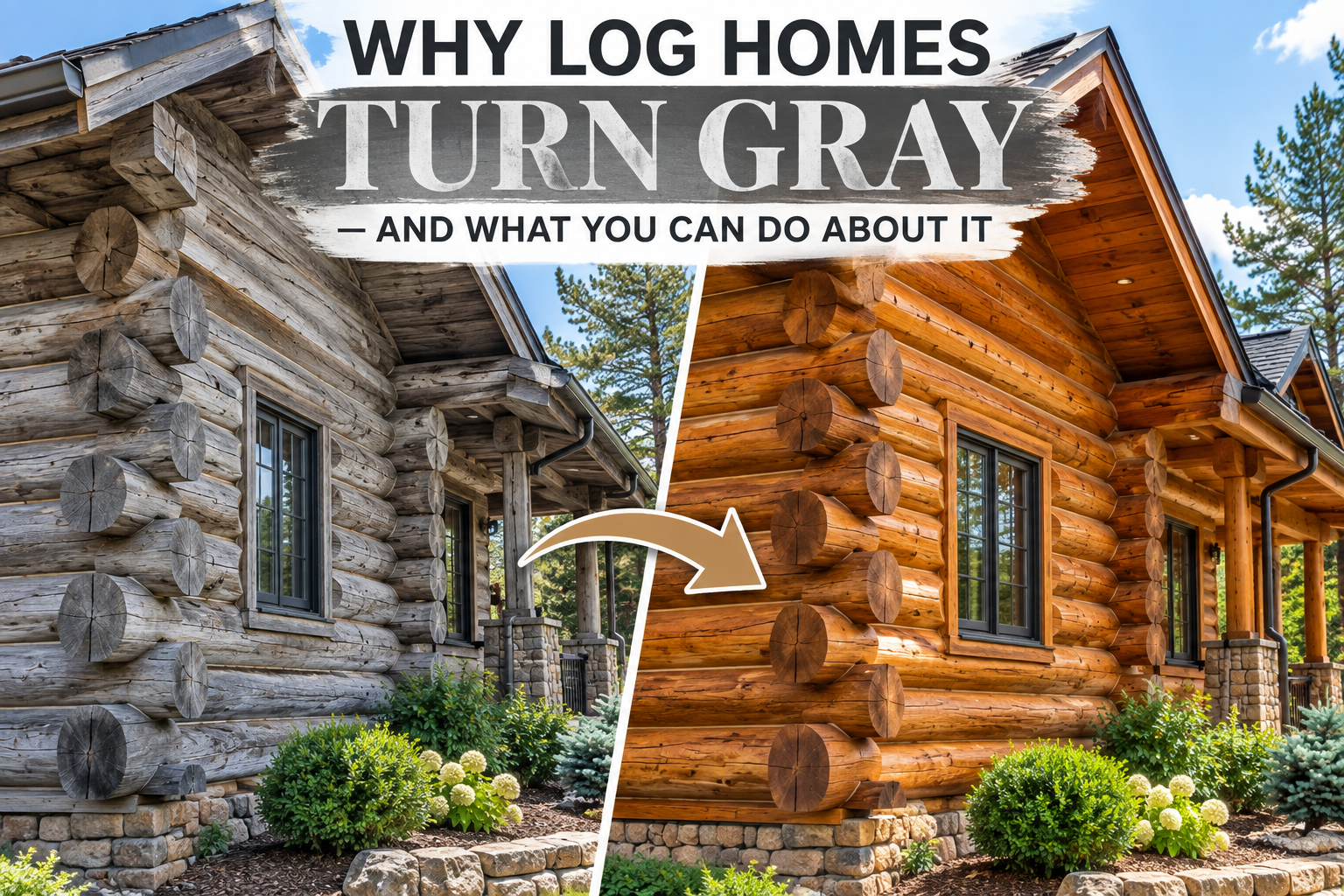

If your once-beautiful golden-brown log home has slowly started turning gray, you’re not alone. Gray logs are one of the most common concerns we hear from log homeowners.
The good news? Gray wood doesn’t automatically mean your log home is ruined. But it does mean your home’s exterior has been exposed to the elements, and it’s worth understanding why the wood is changing and what should be done about it.
Why Does Wood Turn Gray?
The biggest factors are exposure to sunlight, weather, and moisture.
Ultraviolet radiation from the sun breaks down components of the wood surface and contributes to weathering. Rain and repeated moisture exposure can accelerate deterioration, especially when the protective finish is no longer doing its job. Over time, the surface becomes weathered and loses the warm natural appearance that homeowners love about log homes. That’s why you may notice gray logs on one side of your home while another side still looks relatively good.
Why Are Some Walls Grayer Than Others?
Not all sides of a log home receive the same amount of exposure. South-facing walls can receive significant sunlight, while west-facing walls may experience intense afternoon exposure. That can cause some areas of the home to fade and weather faster than others.
You may notice:
● Fading stain
● Gray logs
● Uneven coloring
● Weathered log ends
● More deterioration on exposed walls
This is normal weathering, but it doesn’t mean you should ignore it.
Is Gray Wood Rotting?
Not necessarily.
Gray wood is primarily a sign of surface weathering. However, weathered wood can become more vulnerable when protective finishes fail and moisture is allowed to repeatedly penetrate the surface. That’s why homeowners shouldn’t simply ask, “Why is my home gray?”
The better question is:
“What condition is the wood underneath the gray surface?”
A professional inspection can help determine whether you’re dealing with surface weathering, finish failure, moisture damage, rot, or a combination of problems.
Can You Just Stain Over Gray Logs?
Sometimes the answer is no. If the logs are simply weathered but otherwise sound, the appropriate preparation and finishing system may restore their appearance. But if the existing stain is failing, the wood is heavily weathered, or there are contaminants and damaged fibers on the surface, simply applying another coat can produce poor results.
The preparation step matters.
At 888 Log Guys, restoration projects may involve media blasting, chemical stripping, sanding, cleaning, and other preparation methods depending on the condition of the home.
Why Surface Preparation Matters
Think of stain as the protective finish, not the solution to every underlying problem. If the surface underneath isn’t properly prepared, even a high-quality stain may not perform as intended. Professional preparation helps remove failed coatings and weathered material and provides a suitable surface for the next stage of the restoration process. This is particularly important when a home has several years of accumulated finishes.
What Does the USDA Say About Moisture?
The USDA Forest Service identifies moisture control as one of the fundamental principles of protecting log structures from decay and insect damage. That makes the condition of your exterior finish more than a cosmetic concern. A protective finish, proper sealing, drainage, roof overhangs, and routine maintenance all play a role in keeping moisture-related problems under control.
How Can You Protect Your Logs From Turning Gray?
You can’t stop sunlight and weather from affecting an exterior log home.
- But you can help slow the process.
- Keep your finish maintained
- Don’t wait until the entire home is severely weathered before evaluating the finish.
- Watch south- and west-facing walls (These areas may show wear faster than shaded sides of the home).
- Keep water away from the logs
- Clean gutters, functional downspouts, proper drainage, and attention to water entry points are important.
- Inspect your chinking and caulking. Cracked or deteriorated sealants can allow water to reach areas where it shouldn’t.
- Address problems early
Small maintenance issues are generally easier to address than widespread deterioration.
What If Your Logs Are Already Gray?
Don’t panic. Gray logs can often be restored. The appropriate process depends on the condition of the wood and existing finish.
At 888 Log Guys, we evaluate the condition of the home and determine what preparation and restoration methods make sense for that particular project.
That may include:
● Surface preparation
● Media blasting
● Chemical stripping
● Sanding
● Preservation
● Log repair
● Chinking and caulking
● Staining
● Ongoing maintenance
The goal isn’t simply to make the logs brown again.
The goal is to restore the appearance while helping protect the wood from continued exposure.
If the logs have become gray, faded, or weathered, don’t assume the only answer is another coat of stain.
888 Log Guys has more than 25 years of experience restoring, repairing, staining, sealing, and maintaining log homes throughout Mid-America.
If you’re ready to bring the natural beauty back to your logs, request an estimate today.