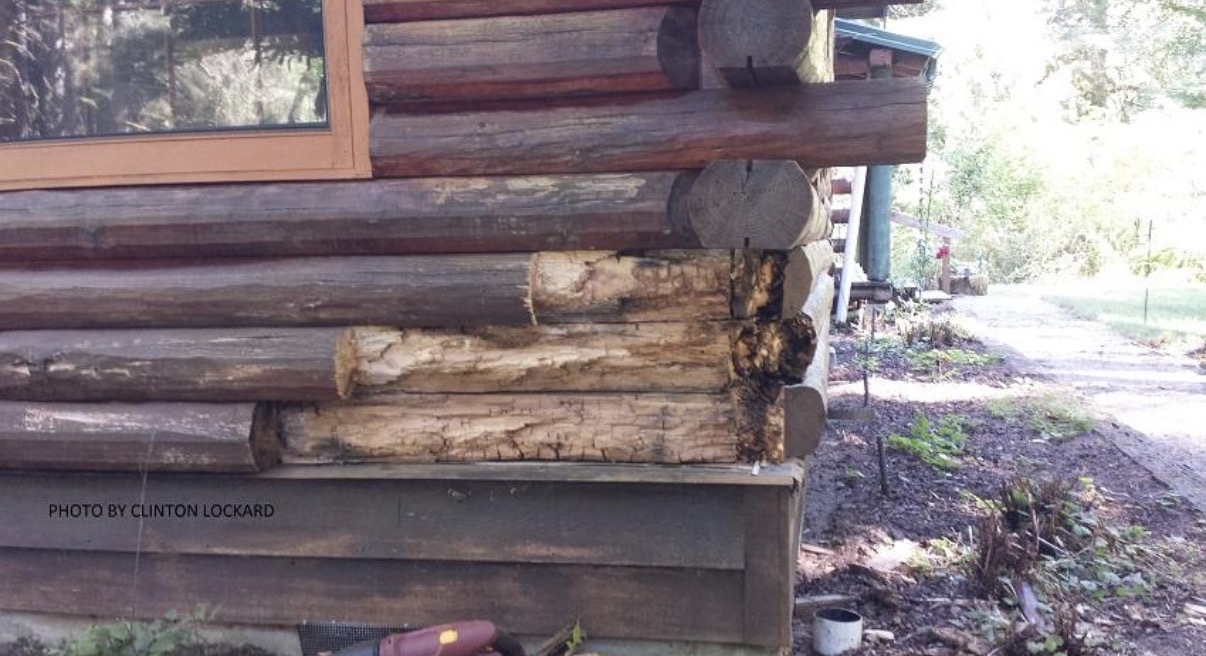

One of the most frustrating things for log homeowners is seeing one cabin age beautifully while another develops rot, soft logs, peeling stain, and expensive structural damage much sooner than expected.
The truth is, not all log homes deteriorate at the same rate. Certain environmental conditions, construction details, and maintenance habits can dramatically speed up wood decay and moisture damage.
At 888 Log Guys, many homeowners are surprised to learn that rot often begins from preventable issues that go unnoticed for years. Understanding what causes accelerated log deterioration can help protect your investment and avoid costly repairs.
Moisture Is the Biggest Enemy of a Log Home
While UV exposure and insects contribute to damage, moisture is the number one reason log homes deteriorate prematurely.
According to the USDA Forest Products Laboratory, wood decay fungi thrive when moisture levels remain elevated over time. Once moisture penetrates unprotected wood, rot can spread quickly beneath the surface.
Common moisture sources include:
- Rain splash-back
- Roof runoff
- Leaking gutters
- Poor drainage
- Humid climates
- Failed caulking or chinking
- Unsealed log checks and cracks
1. Poor Roof Overhangs
One of the biggest differences between long-lasting log homes and homes that rot prematurely is roof design.
Homes with short overhangs expose logs directly to rain, snow, and UV rays. Larger overhangs help shield the wood and dramatically reduce weather exposure.
Signs of roof-related damage:
- Rot beneath eaves
- Water streaking
- Peeling stain near rooflines
- Darkened upper logs
The restoration specialists at 888 Log Guys Log Home Restoration frequently see accelerated deterioration on homes with inadequate roof protection.
2. Gutters and Drainage Problems
Improper water management is one of the most overlooked causes of rot.
Clogged or poorly placed gutters can dump water directly onto logs and foundations. Over time, repeated saturation leads to soft wood, mold growth, and decay.
Common drainage mistakes:
- Downspouts draining near logs
- Splash-back from hard surfaces
- Negative grading around the home
- Mulch piled against lower logs
The National Park Service Preservation Briefs stress the importance of controlling water runoff to preserve exterior wood structures.
3. Delayed Stain Maintenance
Stain is more than cosmetic, it’s a protective barrier against moisture and UV damage.
Once stain begins peeling or fading, the wood underneath becomes vulnerable to:
- Moisture absorption
- Cracking and checking
- Mold growth
- Rot development
- Insect infestation
Many homeowners wait too long before reapplying stain because damage may not be immediately obvious.
Learn more about log home staining services that help protect log homes from premature aging.
4. South and West Facing Walls
Not all sides of a log home weather equally.
South- and west-facing walls often experience:
- Stronger UV exposure
- Faster stain breakdown
- Greater temperature fluctuations
- More drying and cracking
This uneven weathering is why some areas of a home may begin deteriorating years before others.
5. Landscaping That Traps Moisture
Beautiful landscaping can unintentionally create serious problems for a log home.
Common landscaping mistakes include:
- Bushes pressed against logs
- Vines growing on wood
- Sprinklers spraying exterior walls
- Poor airflow around the home
- Flower beds holding moisture against lower logs
These conditions keep wood damp longer after rain and create ideal environments for rot and insects.
6. Ignoring Early Warning Signs
Rot rarely appears overnight. Most severe log damage begins with small warning signs that homeowners overlook.
Early signs of trouble:
- Soft spots in wood
- Small dark areas
- Musty odors
- Carpenter bee holes
- Mold or mildew
- Cracking or separating caulk
Routine inspections and preventative maintenance are the best ways to catch issues early before structural repairs become necessary.
The experts at 888 Log Guys Log Home Maintenance recommend regular inspections to identify hidden moisture and deterioration issues.
How to Prevent Premature Log Rot
Fortunately, most log home rot is preventable with proper care and maintenance.
Key prevention strategies:
- Maintain quality stain systems
- Keep gutters clean and functioning
- Repair failed caulking and chinking
- Improve drainage around the home
- Trim landscaping away from logs
- Address moisture issues immediately
- Schedule routine inspections
Proactive maintenance is far less expensive than large-scale log replacement projects later.
Protect Your Log Home Investment
A well-maintained log home can last for generations, but moisture and neglect can quickly lead to expensive restoration needs.
If your home is showing signs of fading stain, soft logs, cracking, or moisture damage, the professionals at 888 Log Guys can help restore and protect your home with expert staining, repair, media blasting, and maintenance services.